

In this episode we have another installment about retirement in Da Nang, Vietnam. In this episode I hang with a local and try to have conversations with local Vietnamese people. We are having a great time in a different SE Asian country than Thailand and we are really starting to appreciate Vietnam and its people. I am more and more starting to feel Vietnam has a lot to offer RIPpers. In part 11 we will continue to cover what it is like to live in Vietnam and in this episode we have some info and sights and sounds again from Da Nang. We will continue to contemplate the question, “what would life be like living in Vietnam as a retiree?” We will continue to see what the upsides and downsides are to living in a Communist country like Vietnam. In case you missed it here is a little info about Da Nang
Check out our exclusive RetireCheap.Asia membership site – all the REAL life details you need to live in Thailand plus connect with other like-minded people at: http://goo.gl/M0nMT5
Da Nang is the fifth most populated city in Vietnam and is the fifth largest city in Vietnam and one of the major port cities. With an area of 1,255.53 km² and a population of 951,700 as of 2011. Women make up 50.7% of Da Nang’s population.
Situated on the coast of the Eastern Sea, it is the biggest city in Central Vietnam. Da Nang is the commercial and educational center of Central Vietnam, with a well-sheltered, easily accessible port; its location on the path of National Route 1A and the North–South Railway makes it a hub for transportation.
The city was previously known as Tourane (or Turon) during French colonial rule.
The city’s origins date back to the ancient kingdom of Champa, established in 192 AD. One of the first Europeans to visit Da Nang was Portuguese explorer António de Faria, who anchored in Đà Nẵng in 1535. Faria was one of the first Westerners to write about the area. Throughout the 17th and 18th centuries, French and Spanish traders and missionaries regularly made landfall at Hoi An, just south of Da Nang.
During the Republic of Vietnam, the city was home to a major air base that was used by both the South Vietnamese and United States air forces in the War in Vietnam. The base was considered one of the world’s busiest airports during the war reaching an average of 2,595 air traffic operations daily, more than any other airport in the world at that time. The final U.S. ground combat operations in Vietnam ceased on 13 August 1972. After the US-withdrawal from the conflict, in the final stage of the conquering of South Vietnam by North Vietnam, Da Nang fell to the communist forces March 29/30, 1975.
Da Nang has a tropical monsoon climate with two seasons: a typhoon & wet season lasting from September through March and a dry season lasting from April through August. Temperatures are typically high, with an annual average of 25.9 °C (78.6 °F). Temperatures are highest between June and August (with daily highs averaging 33 to 34 °C (91 to 93 °F)), and lowest between December and February (highs averaging 24 to 25 °C (75 to 77 °F)). The annual average for humidity is 81%, with highs between October and December (reaching 84%) and lows between June and July (reaching 76–77%).
Please subscribe to our YouTube channel and you if can, link back to this website I’d appreciate it. Also in this website are more videos, books on retiring abroad and a Retirement Budget Calculator. Enjoy and remember, there’s always an option!
Stock Media Provided by Pond5
Funky Chunk and Bumba Crossing – Kevin MacLeod (incompetech.com) Licensed under Creative Commons “Attribution 3.0” http://creativecommons.org/licenses/by/3.0/
This video also features the song “At The Fair” by The Green Orbs from the YouTube music library.
The Way I Watch Sports and Movies - JC
 Note that this VPN is an affiliate link and the proceeds go towards the upkeep and maintenance of this site
The Ultimate Expat Relocation Checklist and Coaching Guide

More Videos You Might Like:
 JC’s Road Trip – Vietnam Pt 8 – Nha Trang #2
 JC’s Road Trip – Vietnam Pt 7 – Nha Trang
 JC’s Road Trip – Vietnam Pt 10 – Da Nang #1
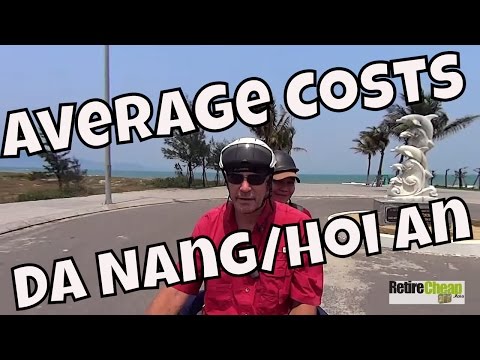 JC’s Road Trip – Vietnam Pt 12 – Averaged costs Da Nang / Hoi An
 JC’s Road Trip – Vietnam Pt 15 – Return to Hoi An pt 1
 JC’s Road Trip – Vietnam Pt 6 – Da Lat-03
 JC’s Road Trip – Vietnam Pt 14 – Hue #2
 JC’s Road Trip – Vietnam Pt 1 – HCMC Saigon


